Bathroom Waterproofing Standards in South Australia: What AS 3740 Actually Requires
When planning a bathroom renovation, there is one important factor that homeowners should never overlook: waterproofing. The bathroom waterproofing standards South Australia follows are set out in AS 3740, the Australian standard for waterproofing domestic wet areas. This rule applies to every bathroom, laundry and ensuite across Australia. If you do not follow this rule, the city council will not approve your renovation project. Hiring a renovator who follows AS 3740 is essential. Waterproofing that does not meet the standard can lead to water leaks, structural damage, failed inspection and expensive repairs. In some cases, insurance claims for water damage may also be rejected if the waterproofing was not completed correctly. In this guide, we will explain what AS 3740 requires.
What Is AS 3740?
AS 3740 is the Australian Standard that sets the minimum waterproofing requirements for residential wet areas, including bathrooms, ensuites, laundries, and toilets. Its purpose is to prevent water from escaping into the building structure, where it can cause timber rot, mould, and long-term damage. The standard clearly explains:
- Which areas must be waterproofed?
- How high waterproofing membranes should extend on walls.
- How floor and wall junctions should be sealed.
- How waterproofing should connect to floor wastes and pipe penetrations.
AS 3740 works alongside the National Construction Code (NCC). While the NCC states that water must not damage building elements, AS 3740 provides the accepted method of achieving that requirement.
What Does AS 3740 Require?
AS 3740 is the official Australian standard that sets the rule of keeping water inside wet rooms and out of the home structure.
1. Shower Wall Waterproofing
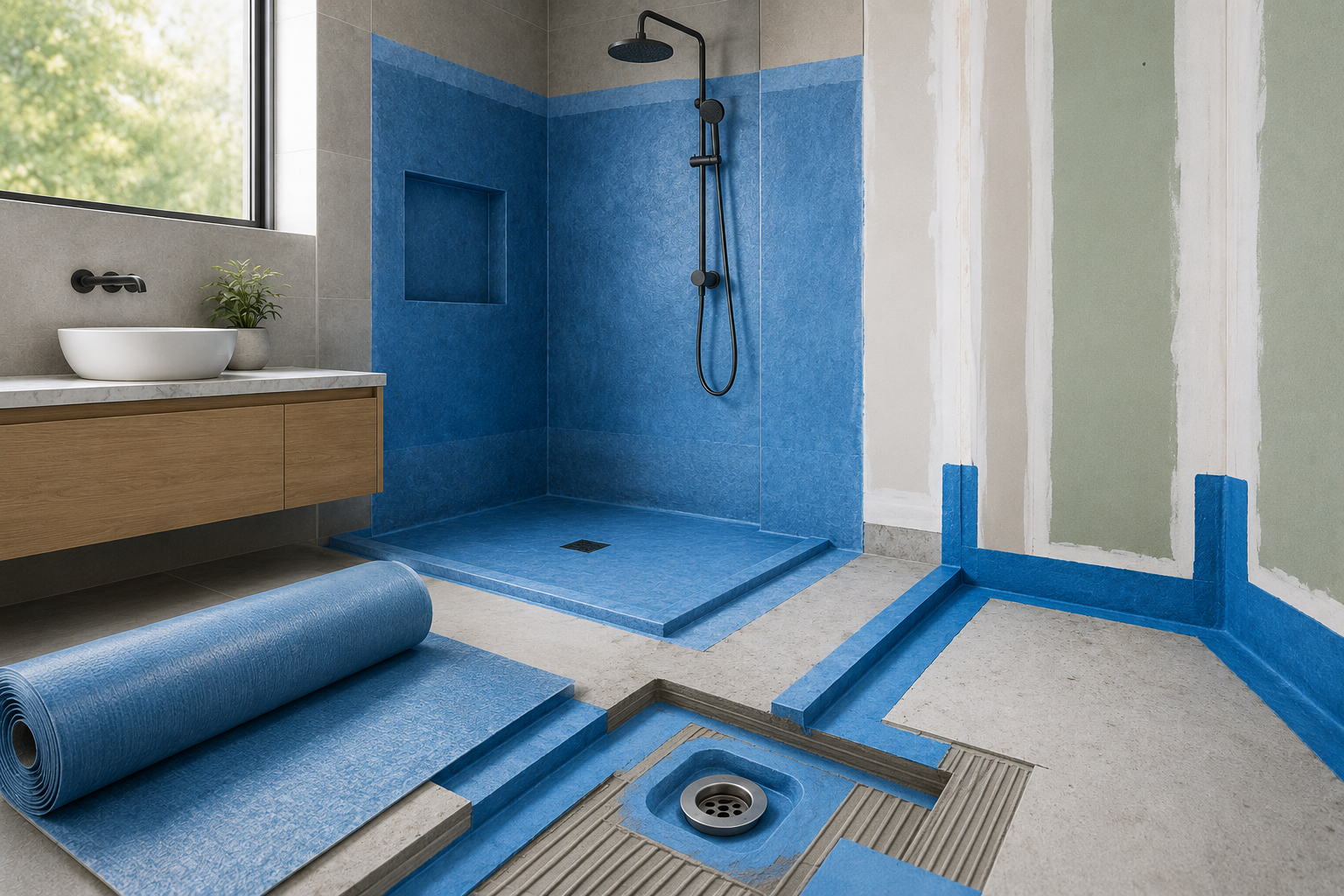
Your shower area is the wettest part of your bathroom, so it has the strictest waterproofing requirement. According to AS 3740, the shower must be waterproofed to at least 1800 m above the finished floor level or 50 m higher than the shower rose, whichever is greater. This protects the wall from constant water exposure and helps prevent moisture from reaching the wall frames.
2. Shower Floor Falls
A waterproof membrane alone is not enough. Water also needs to drain properly. AS 3740 requires shower floors to slope towards the floor waste with a fall between 1:80 and 1:50. This ensures water flows directly to the drain instead of pooling on the floor, reducing the risk of leaks and mould growth.
3. Vertical Water Stops
If a shower is located within 200 mm of a bathroom doorway or exit, a vertical water stop must be installed. It is an important barrier that helps stop water from flowing out of the shower area, damaging the surrounding floors.
Waterproofing Rules for the Rest of the Bathroom
Although the shower receives the most water, the rest of the bathroom also requires protection.
1. Floor and Wall Junctions
Every internal corner and floor-to-wall junction must be completely sealed. Flexible bond breaker tape is often used before applying the waterproof membrane, allowing the waterproofing system to move slightly with normal building movement without cracking.
2. Floor Wastes
The waterproof membrane must extend directly into the floor waste and be securely bonded to the waste flange. This creates a continuous waterproof seal around one of the most common locations for water leaks.
3. Bathroom Floors
Your bathtub floor outside the shower must also be waterproofed. The membrane should continue up the surrounding walls to a minimum height of 150 mm, creating a protective barrier that prevents water from spreading into adjacent rooms.
Who Can Apply Bathroom Waterproofing?
In South Australia, only a person holding a certified II in waterproofing or a building work contractor licence with waterproofing endorsement can apply for bathroom waterproofing. They are qualified and experienced tradespeople who understand AS 3740 requirements. Professional waterproofers know how to prepare surfaces, apply compatible membrane systems, reinforce corners and joints, and ensure the finished waterproofing meets Australian Standards before tiling begins.
What Does a Compliance Certificate Prove?
After waterproofing has been completed correctly, you may receive a compliance certificate or documentation confirming the work meets the required standards.
This provides evidence that your waterproofing has been completed in accordance with Australian Standards.
WOW Bathroom Renovation – Certified Waterproofing for Long-Term Protection
AS 3740 exists to protect Australian homes from water damage by ensuring bathrooms are waterproofed correctly from the start. While much of the waterproofing is hidden beneath tiles, it plays a vital role in keeping your home dry, structurally sound, and compliant with building regulations. Before starting your next bathroom renovation, make sure your contractor understands and follows AS 3740 requirements. Proper waterproofing today can help prevent leaks, mould, and costly repairs for many years to come. If you are looking for certified, experienced and long-term bathroom renovators, Wow Bathroom Renovations is a great choice. We ensure your bathroom waterproofing meets the highest professional standards and gives you peace of mind.
Frequently Asked Questions
1. Is bathroom waterproofing mandatory in South Australia?
Yes. Bathroom waterproofing is mandatory and must comply with AS 3740 and the National Construction Code (NCC). These standards help prevent water damage, mould growth, and structural issues in residential wet areas.
2. What areas of a bathroom need to be waterproofed?
The shower area, which includes the shower walls and floor. Bathroom floors outside the shower also need waterproofing, along with floor-to-wall junctions, internal corners, and areas around floor wastes and penetrations, as specified in AS 3740.
3. What is a waterproofing compliance certificate?
A waterproofing compliance certificate is documentation that confirms the waterproofing work has been completed in accordance with the applicable Australian Standards and building regulations.
4. What happens if bathroom waterproofing does not meet AS 3740?
Non-compliant waterproofing can result in water leaks, mould growth, damaged flooring and wall structures, failed building inspections, and expensive repair work. In some cases, insurance claims related to water damage may also be affected if the waterproofing was not installed correctly.